Key Takeaways
- Oversized and irregular pallets require specialized wrapping techniques, not just extra industrial pallet wrapping film.
- Turntables and manual wrapping fall short when loads are too large or unstable.
- Proper load preparation, tension control, and optimized packing wrap patterns improve load containment dramatically.
- Automation eliminates key challenges of manual stretch wrapping, with mobile robotic wrappers delivering flexibility and efficiency.
- Global Industrial’s NEW Mobile Robot Stretch Wrap Machine gives operators a flexible, safe, and highly efficient way to wrap pallets of virtually any shape or size.
Oversized, irregular, and awkward pallets are the ultimate test of any packaging operation for three key reasons:
- They don’t sit neatly on a turntable. Traditional stretch-wrapping machines often use turntables to rotate the pallet. If the load is oversized or uneven, it can hang over the edge or become unstable.
- They don’t rotate cleanly. Irregular shapes can cause wobbling or shifting during rotation, which can lead to safety risks and poor wrap quality.
- They don’t behave when hand-wrapped. Manual wrapping is labor-intensive and inconsistent, especially for awkward loads. Workers struggle to maintain even tension and coverage, leading to inefficient or unsafe wraps.
And those are just the kinds of variables that can slow down your workflow, increase material waste, compromise safety, and result in rejected freight.
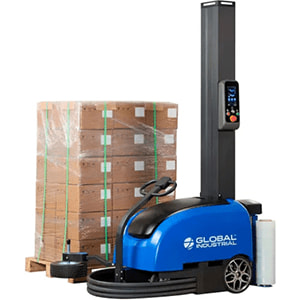
Finally, we have a way to wrap oversized and odd-sized pallets without the headaches of turntables or manual labor with the Global Industrial NEW Mobile Stretch Wrap Machine.
Why Proper Wrapping Matters
Oversized & Irregular Pallets Need Attention
When a pallet doesn’t fit a standard form factor, the stakes get much higher. Wrapping pallets correctly is essential because it:
- Prevents load shifting and damage in transit.
- Reduces industrial wrapping film waste through better tension control and optimized patterns.
- Improves employee safety by reducing strenuous manual wrapping.
- Eliminates bottlenecks caused by turntables that can’t accommodate large loads.
- Minimizes claims and keeps customers satisfied.
- Delivers consistent, repeatable results, especially when automated.
Anything oversized demands a smarter approach, not more film.
The Biggest Challenges You’ll Face
1. Turntable Limitations
Traditional turntable stretch-wrap machines only work when the pallet fits neatly on the platform. When products overhang, or when the load is too tall, long, or heavy, the process becomes unsafe and often impossible.
Common issues include:
- Loads larger than the turntable can’t rotate safely.
- Irregular shapes create inconsistent shipping stretch wrap layers.
- Higher risk of film tears, tipping hazards, or potential equipment damage.
2. Inefficiencies of Manual Wrapping
While hand wrapping works for occasional small loads, it falls apart quickly when dealing with bulky or awkward pallets.
Major drawbacks:
- Uneven tension can lead to unstable loads.
- Higher risk of strains and injuries from bending, pulling, and circling the pallet.
- Film usage - often double what a machine would use.
- Slow, inconsistent results, especially with high-volume workflows.
3. Load Complexity
Oversized and odd-sized pallets often include items that are:
- Mixed sizes or SKUs.
- Uneven in height.
- Protruding or irregularly shaped.
- Long or bulky (doors, beams, piping, equipment).
- Stacked in unpredictable configurations.
Each quirk introduces a new wrapping challenge.
Best Practices for Wrapping Oversized & Odd-Shaped Pallets
The Techniques Leading Operations Rely Upon
Wrapping irregular pallets effectively requires a combination of smart preparation and consistent techniques, not just more layers of stretch film for moving. Let’s break it down:
1. Start With Robust Load Preparation
Before any film touches the load, preparation matters:
- Center heavy items low to reduce tipping.
- Use corner boards or protective edge guards for protrusions.
- Ensure the pallet itself is in good condition—replace damaged boards.
- Stabilize loose or mixed loads with strapping or blocking.
2. Apply Proper Film Tension
Consistent tension is the key to maintaining containment without tearing:
- Maintain even tension throughout the wrap.
- Reinforce “stress points” around corners and protrusions.
- Avoid over-tightening, which can cause film snapping.
- Secure the base tightly to eliminate load-to-pallet separation.
3. Use the Right Film Type for the Job
Different sizes and shapes demand different films:
- High-performance industrial wrapping film for automated solutions.
- Pre-stretched film for consistent containment.
- Varied film widths for reaching irregular contours.
- Higher gauge films for sharp edges or bulky materials.
4. Optimize the Wrap Pattern
Wrapping an odd-sized pallet requires pattern adjustments:
- Start low and secure the load to the pallet.
- Add extra revolutions at the top and bottom.
- Use a figure-8 or cross-wrap method for irregular or unstable shapes.
- Add reinforcement passes where the load transitions height.
5. Prioritize Employee Safety
Safety considerations become even more important with oversized pallets:
- Reduce or eliminate operator interaction with spinning platforms.
- Keep workers outside pinch zones.
- Avoid repetitive-motion strain from excessive hand wrapping.
- Maintain clear forklift approach lanes.
Automation can dramatically reduce these risks. And don’t forget, automation doesn’t just speed up the process. It also solves the fundamental limitations of turntables and hand wrapping, with key advantages being: consistent tension and coverage; faster wrap cycles with less labor; safe wrapping of oversized loads that can’t rotate; reduced film consumption; predictable load stability and fewer damage claims.
PRODUCT SPOTLIGHT:
The NEW Global Industrial Mobile Robot Stretch Wrap Machine
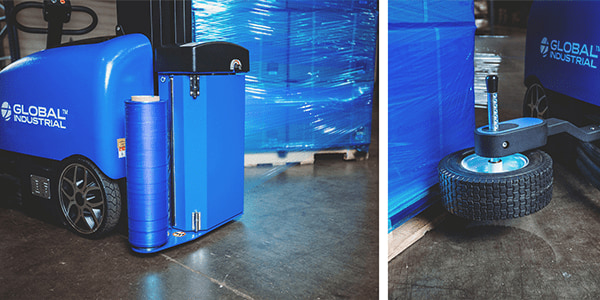
Global Industrial has introduced a major leap forward in wrapping oversized pallets: the Mobile Robot Stretch Wrap Machine. Instead of forcing the load to rotate, this robotic unit moves around the pallet itself.
This instantly solves the biggest pain points around oversized wrapping.
Ideal for:
- Oversized pallets.
- Odd-shaped or irregular loads.
- Freight that extends beyond the pallet footprint.
- Extremely heavy or tall items.
- Bulky building materials, equipment, or mixed loads.
This device is purpose-built for the exact challenges described in this article, and represents the next level of wrapping automation.
Key Benefits
- Wraps any size pallet with no platform required.
- Consistent film tension for superior load containment.
- Safer for operators — no contact with rotating platforms.
- Faster throughput for high-volume operations.
- Reduced film usage through optimized wrap cycles.
Supporting Products That Improve Oversized Pallet Wrapping
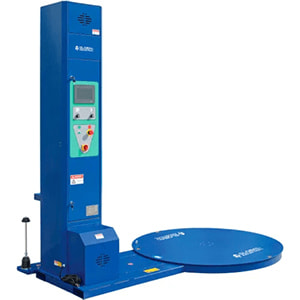
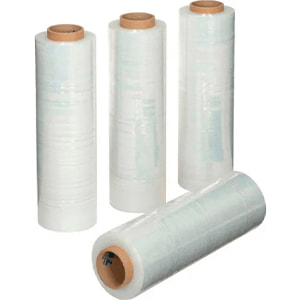
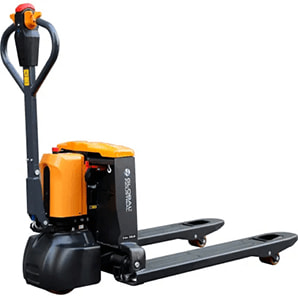
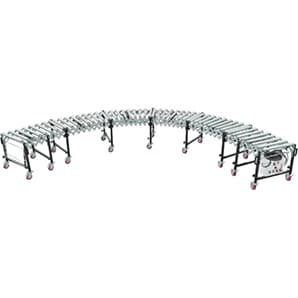
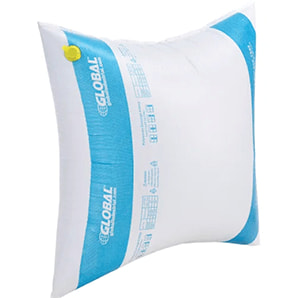
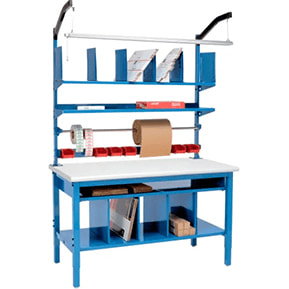
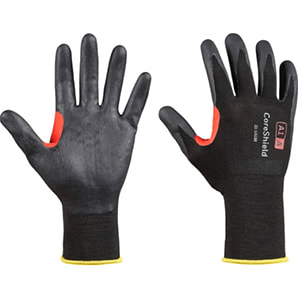
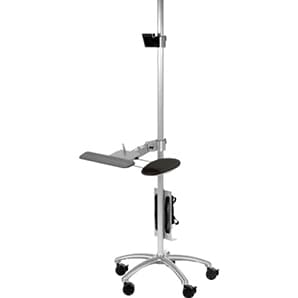
For a complete workflow upgrade, Global Industrial offers supporting product categories, including:
Frequently Asked Questions?
1. How do you wrap a pallet that’s larger than a turntable?
Use a mobile wrap solution that moves around the load instead of rotating it. This eliminates overhang risks and ensures consistent coverage.
2. What type of stretch wrap works best for odd-shaped pallets?
High-performance machine film or pre-stretched wrapping film roll works best due to consistent tension. Heavier gauges may be used for sharp or protruding edges.
3. How do I secure mixed-SKU or uneven loads?
Start with strong load prep, using corner boards, strapping, and proper weight distribution. Then reinforce weak points during wrapping.
4. Is manual wrapping ever recommended for oversized pallets?
Manual wrapping can work for very small-volume operations, but it’s inconsistent, labor-intensive, and prone to injury. Automation is significantly safer and faster.
5. How do mobile stretch wrap machines improve safety?
They remove the need for operators to walk in circles, bend repeatedly, or approach rotating platforms. This dramatically reducing strain and pinch-point hazards.
6. Will a mobile robotic wrapper reduce film usage?
Yes. By applying consistent tension and controlled overlaps, automated systems generally use 20–40% less film than hand wrapping.
7. How do I know if my warehouse is ready for wrapping automation?
If you handle oversized pallets weekly, struggle with load stability, or have high labor turnover around packaging tasks, automation can deliver immediate ROI.
Ready to eliminate pallet wrapping headaches? Contact our experts today for a custom solution.
The information contained in this article is for informational, educational, and promotional purposes only and is based on information available as of the initial date of publication. It is the reader’s responsibility to ensure compliance with all applicable laws, rules, codes, and regulations. If there is any question or doubt in regard to any element contained in this article, please consult a licensed professional. Under no circumstances will Global Industrial® be liable for any loss or damage caused by your reliance on this article.